Post
Ever heard of a subchorionic haematoma?
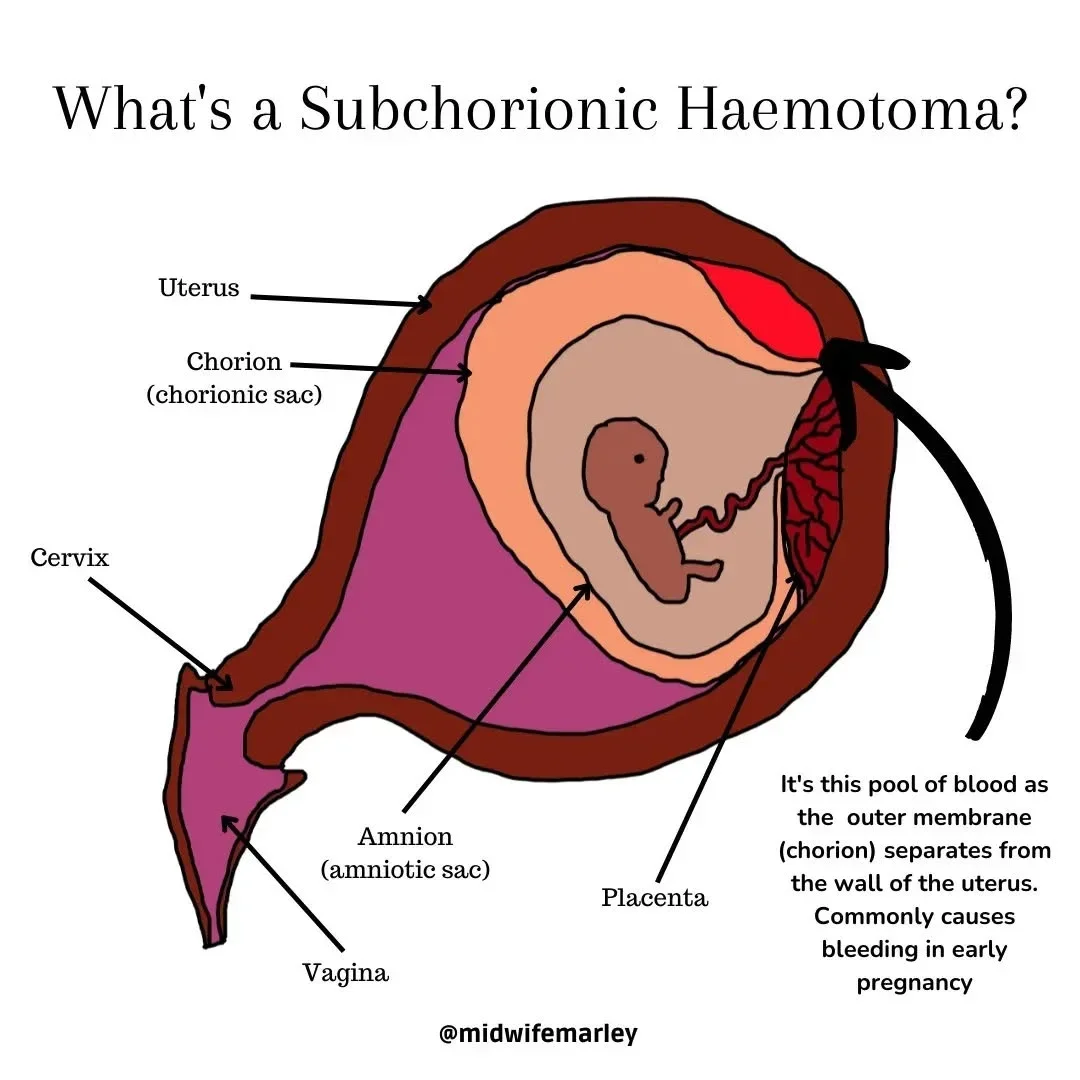
Ever heard of a subchorionic haematoma? well, these are responsible for around 20% of vaginal bleeding cases during the first trimester of pregnancy.
During early pregnancy, the baby is growing inside two membranes (sacs), called an amnion and chorion. The amnion is the inner sac and the chorion is the outer sac. The chorion grows big and virtually sticks to the walls of the uterus. Sometimes, pooling of blood can occur where there is a large space between the wall of the uterus and chorion. This is called a haematoma. There are several reasons they may occur including:
Uterine anomalies History of recurrent miscarriages Pelvic infections Trauma Severely high blood pressure IVF/ICSI Sometimes though, the cause is unknown.
Small haematomas often go away on their own, larger ones are more likely to cause complications such as miscarriage and preterm birth.
If a haematoma is detected before 20 weeks, rest is usually advised. If it's detected at a later stage, depending on the size, you may be admitted to hospital if there is active bleeding, with both you and your baby being monitored.
Bleeding in pregnancy isn't always down to a subchorionic haematoma but should always be brought to the attention of your care provider.