Post
Many women are led to believe that her breasts have no milk in them until day 3-4 and…
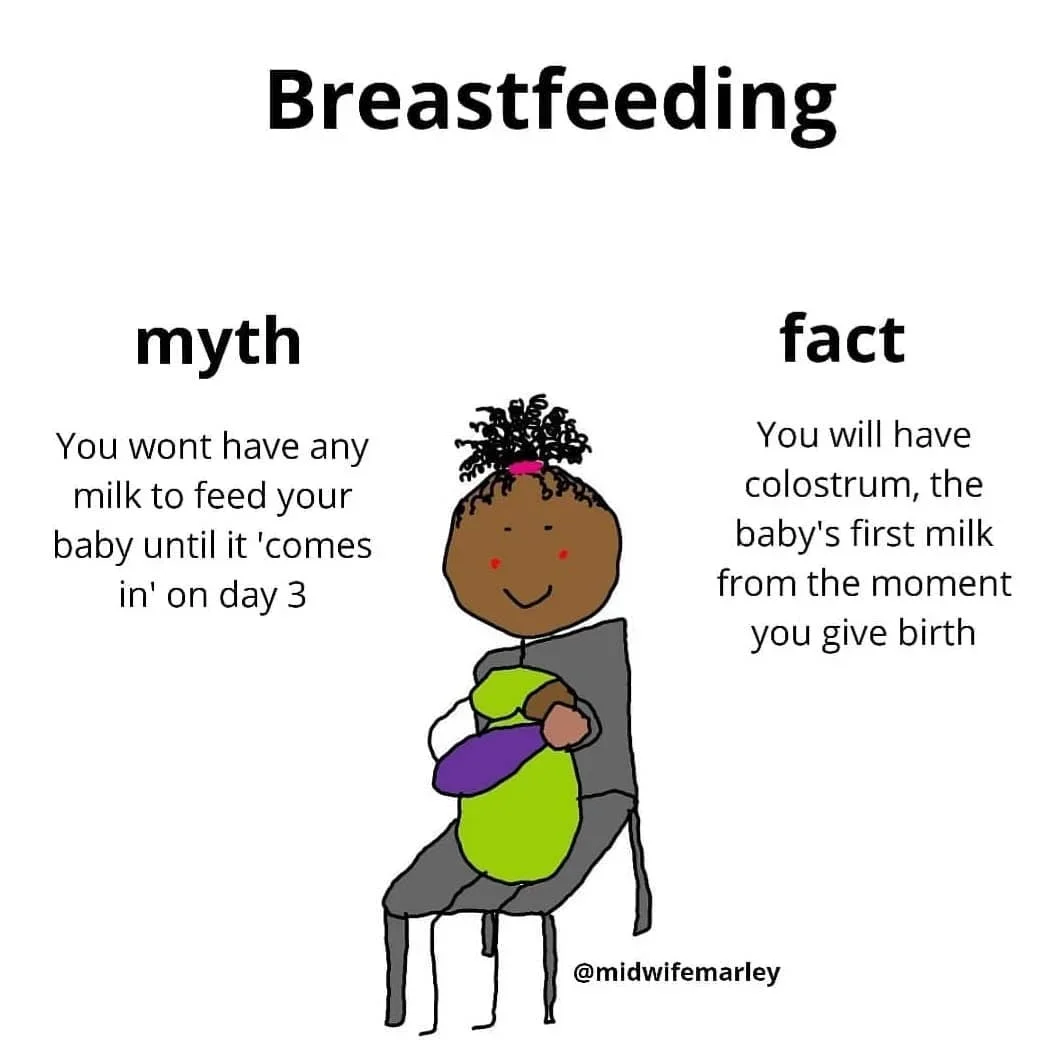
Many women are led to believe that her breasts have no milk in them until day 3-4 and that their babies practically starve until then. After birth, breasts will have an early milk called colostrum in them which is commonly a thick yellow substance and is low in volume. You start producing it in pregnancy. You are unlikely to leak or have wet patches but should however find that a a few drops come out if you hand to express. Ask your midwife/lactation consultant to show you how to do it. You will find that the baby will want to feed often in the first few days to encourage the full milk to come in. . Healthy full term babies are born with a good layer of fat so are able to withstand the first few days when the colostrum supply is in smaller quantities. This does however encourage them to feed more! . You will feel like your baby is feeding constantly at first 😫 The first 24 hours after birth however you may find that the baby only feeds a handful of times as they recover and sleep. Usually having a very long feed shortly after birth and then a good few hours of sleep! . By day 3-4, the colostrum changes to what is often called ‘full milk’. It’s white and increases in volume. You may feel your breasts are engorged at this time as your body is trying to work out how much milk to produce for your baby and it may last a couple of weeks. . Factors that can delay milk coming in: Postpartum haemorrhage, dehydration, stress, poor attachment/positioning, not breastfeeding regularly enough to encourage milk supply ie replacing breastfeeds for formula in a bottle during the night. . Enlist the support of your midwife/ lactation consultant in the early days to make sure baby is latched on correctly. Your midwife will also monitor the babies weight, nappies and general wellbeing. If you are thinking of combi feeding (breast and formula) it’s still a good idea to try and stick to the breast in the early days to get feeding established and to avoid any delays with milk coming in. It will also prevent ‘nipple confusion’ Some babies feed well from the bottle and breast but some will struggle to get back onto the breast after feeding from a bottle early on.