Post
I posted a couple of weeks back about these marks that are often found on babies from…
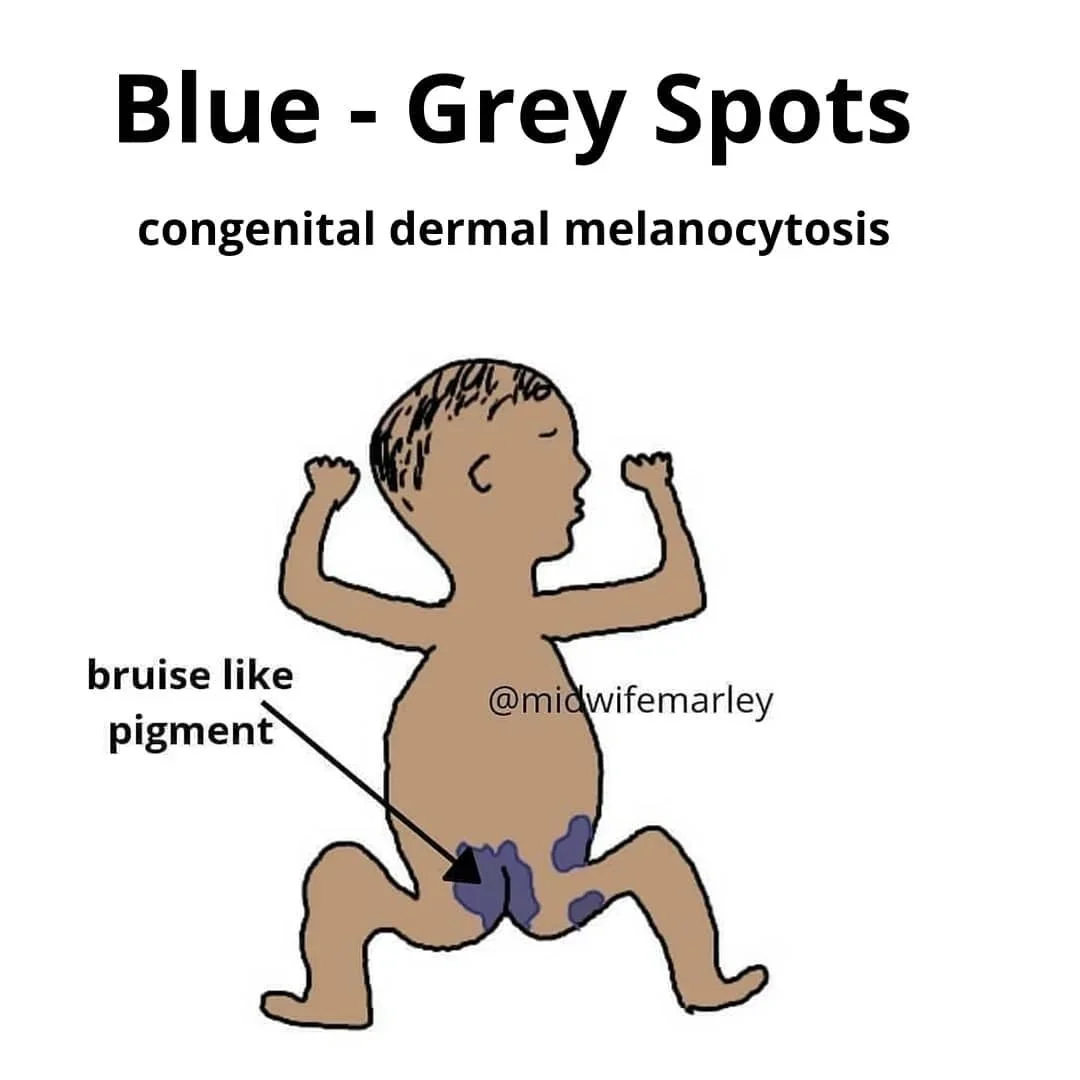
I posted a couple of weeks back about these marks that are often found on babies from certain ethnic groups. . Historically they were called 'Mongolian blue spots' a term which I too had used for many years and a term that was on the NHS website. It had been highlighted to me by an amazing student midwife @aiti4aitiys in several of her recent posts that this term was in fact racially insensitive and is just another example of colonialised medical terminology. After doing further research into this term, I too agree that it should be abandoned. It's history and meaning goes deeper than simply being named after discovery on a particular group of people in East Asia as I had originally thought. . It is no conicidence that after @aiti4aitiys repeated posts and raising awareness on the issue of decolonising medical and birth terminology, the term 'Mongolian blue spot' has now been removed from the NHS website and is now to be called Blue grey spots. . Info from my original removed post: Blue-grey spots (congenital dermal melanocytosis) are a kind of birthmark that are flat, blue, or blue-grey and can vary in size. They are often found on the buttocks and lower back, appearing at birth or in the first few weeks of life. These spots are more common in non-white infants. . At least one spot is present on over 90% of Native Americans and people of African descent, over 80% of Asians, over 70% of Hispanics, and just under 10% of fair-skinned infants. This 10% is mostly made up of babies with roots in the Mediterranean. If a blue spot is noticed at birth, it will likely be documented by the person examining your newborn so that they are not mistaken for bruises. These spots usually fade but can take months or even years! P.s the drawing is supposed to be a baby laying on her front not back 🤔😂