Post
Lets talk about postpartum blood loss
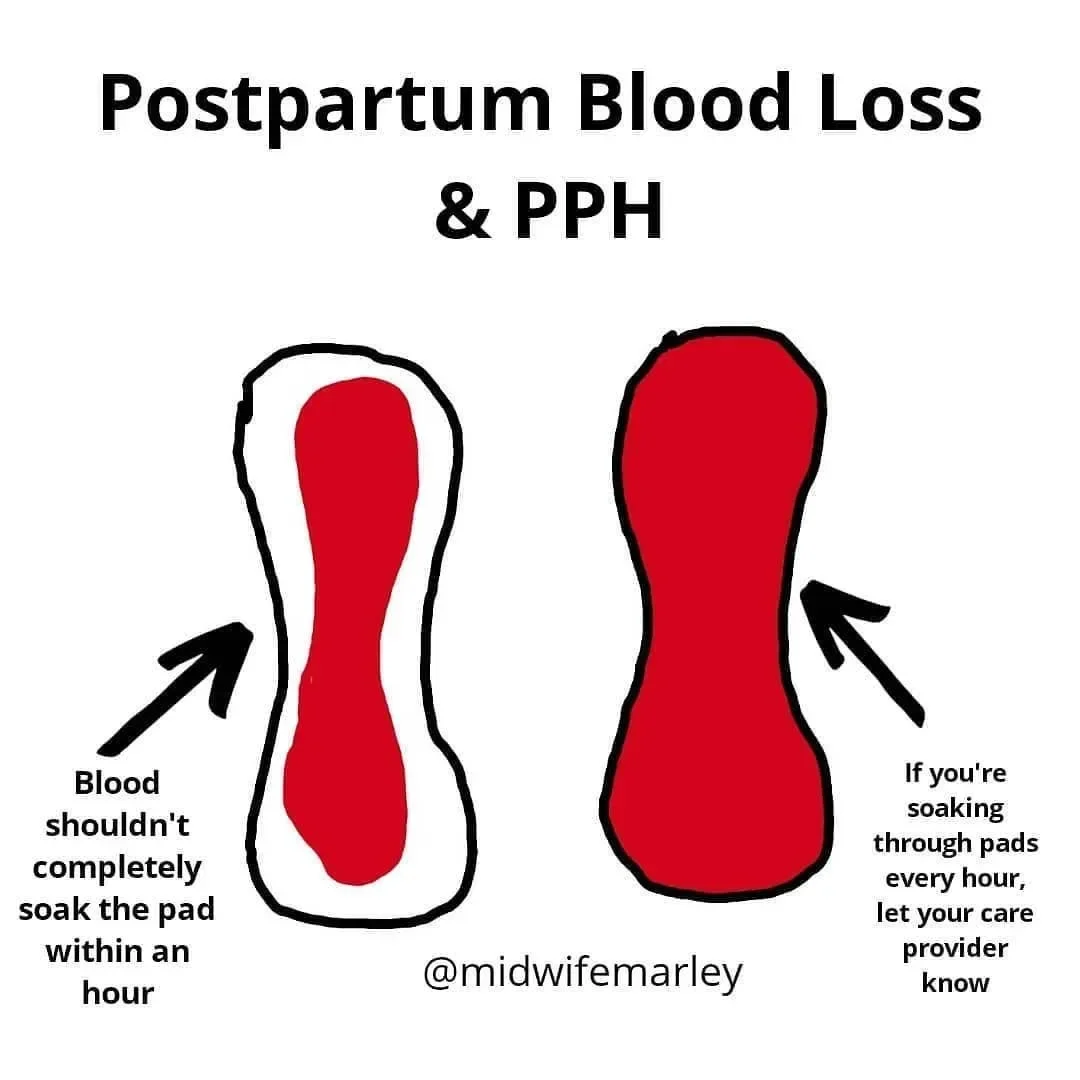
Lets talk about postpartum blood loss. It's normal to lose blood vaginally after the birth of your baby regardless of whether it's a c-section or vaginally birth. . Normal blood loss is estimated below 500mls. Depending on where you are from, some hospitals/birth centres will consider anything over 500ml to be a postpartum haemorrhage (PPH) and some wont consider a PPH unless the blood loss is over 1000ml. . Most PPH's happen immediately after the birth and most are due to the uterus not contracting down straight away thus bleeding from where the placenta was attached. Sometimes PPH is caused by perineal/vaginal tears that catch a blood vessel. . In the UK if we suspect a PPH after birth we will check to make sure the placenta is completely out and rub the fundus (top of your uterus) on the outside to stimulate it to contract. In some countries this is done routinely to everyone as a preventative measure regardless of whether there is excessive bleeding or not (known as a fundal rub) If the bleeding continues further steps and drugs are given to control it. There is no hard evidence to support routine fundal rubs in the absence of a haemorrhage. . A PPH can happen any time within a couple of months of giving birth! Its more likely however in the first 24 hours. . Keep an eye on your postpartum blood loss by checking how often you are changing pads. If you are soaking through more than one an hour then you need to inform your care provider. You may notice blood clots in the first few days but let your care provider know if they are bigger than the size of a plum. If you feel unwell, dizzy or nauseous after giving birth then again, make sure you let someone know.


