Post
Look at all these placental variations!
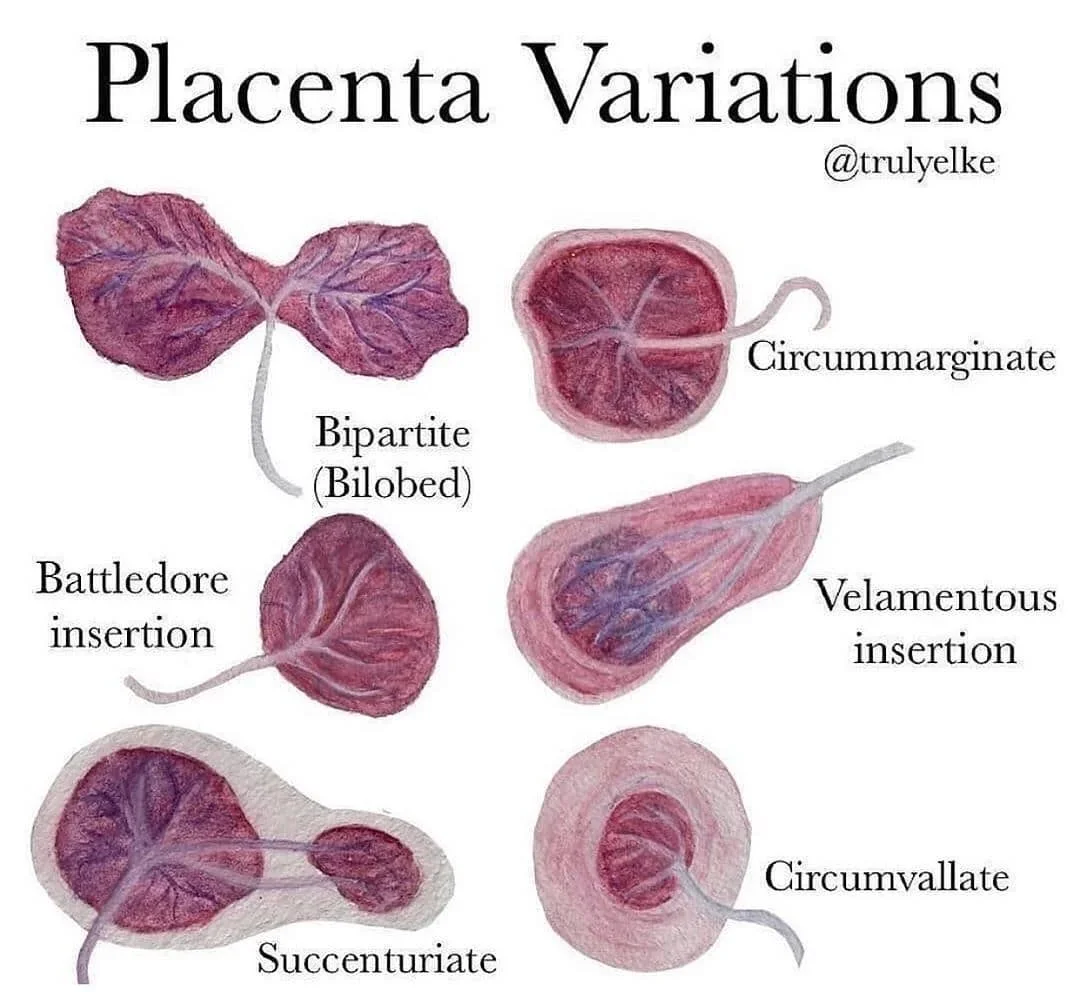
Look at all these placental variations! Typically the umbilical cord is inserted in or near the center of the placenta. However their are some interesting variations that can occur in the placenta. These variations may or may not cause problems depending on how the delivery of the placenta is managed and the interventions that took place in labor.
1.) Bipartite placentas occur when there is two (or three) completely separate lobes. Each lobe has an umbilical cord leaving them yet join a short distance from the separate lobes.
2.) Battledore insertion is when the umbilical cord is attached to the edge of the placenta. ⠀⠀⠀⠀⠀⠀⠀⠀ 3.) Succenturiate lobe is an extra lobe that forms that is separate but still attached to the main placenta by blood vessels running through the membranes. ⠀⠀⠀⠀⠀⠀⠀⠀ 4.) Circummarginate placenta is a variation of the normal shaped placenta and is characterized by the thinning of membranous tissue on the fetal side. ⠀⠀⠀⠀⠀⠀⠀⠀ 5.) Velamentous insertion is when the cord inserts into the membranes and the umbilical blood vessels also run through the membranes. There may be little Wharton's jelly protecting part of the umbilical cord. ⠀⠀⠀⠀⠀⠀⠀⠀ 6.) Circumvallate placenta occurs when the chorion and amnion double back creating a ring on the fetal surface of the placenta. ⠀⠀⠀⠀⠀⠀⠀⠀ Wonderful illustration by @trulyelke . . . #bump #midwifery #pregnantbelly #pursuepretty #pregnancyjourney #pregnancyadvice #expectful #studentmidwife #bumpie #bumplife #bumpdate #inspirepregnancy #bumpwatch #familygoals #husbandandwife #placenta #pregnancydiary #pregnancyblogger #ohbaby #pregnant #pregnantbelly #expecting #thebump


