Post
Lots of talk about fundal rubs lately!
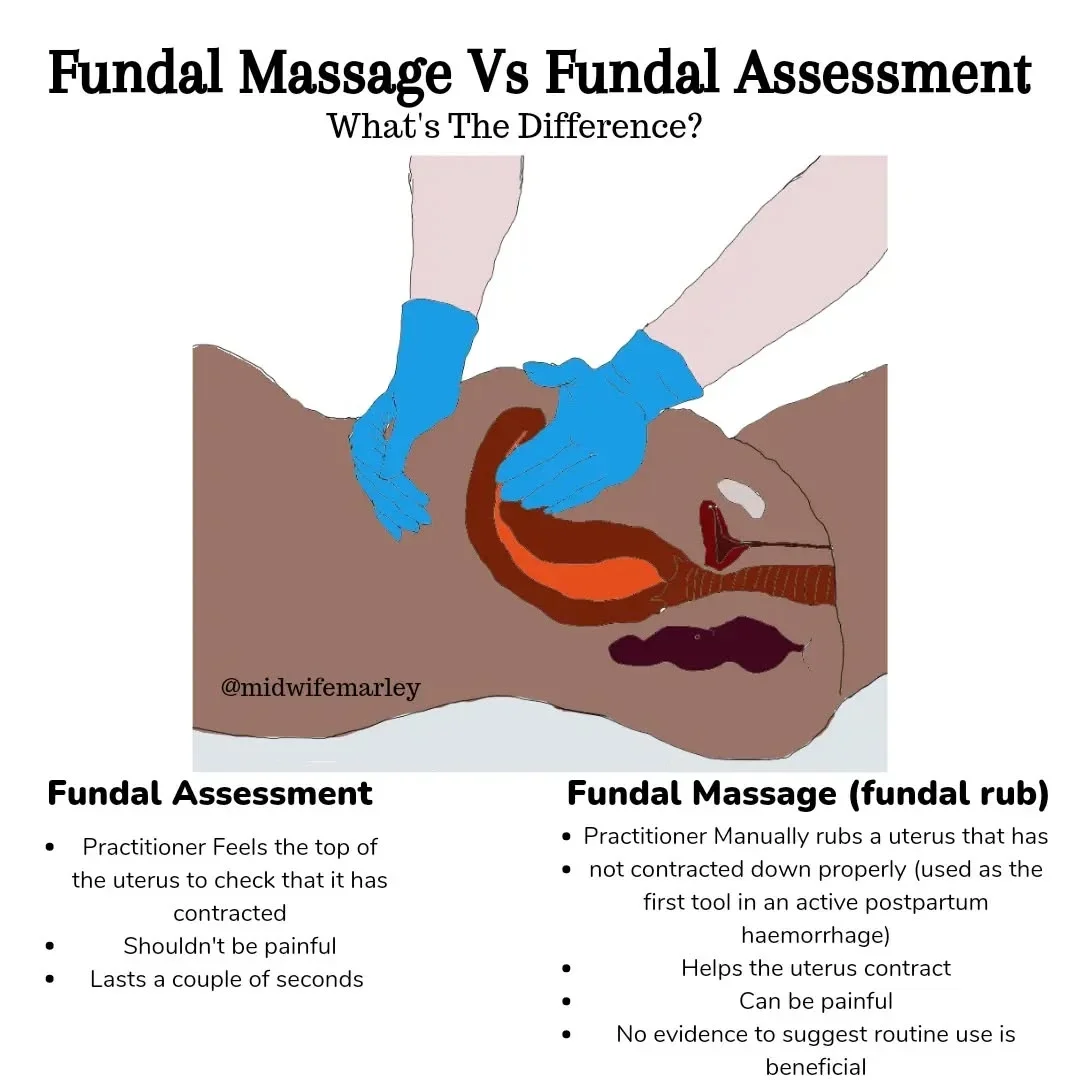
Lots of talk about fundal rubs lately! Can be a bit confusing understanding what they are and what they are supposed to do, so I'll break it down for you.
When you give birth and the placenta comes out, the uterus clamps down due to the surge of oxytocin being released by the body. This prevents the vessels that were connected to the placenta bleeding out, resulting in haemorhage. Some women will opt to have a synthetic form of oxytocin (syntocinon/pitocin) to help this process too.
Occasionally the uterus doesn't contract back down as it is supposed to, and this results in uterine atony, or a 'boggy' uterus as we sometimes call it in the UK, along with excessive blood loss.
In this situation, to work out whether the uterus has contracted or not, a healthcare practitioner places their hand on the top of the uterus to see if it feels hard. They may check again later in the day and again in the following days during postnatal checks.
If they check and uterine atony is present (often indicated by excessive bleeding), a fundal rub is usually the first thing they will due to manage a PPH. The stimulation can help the atonic uterus clamp down thus preventing further blood loss.
Routinely doing this on a uterus that is perfectly fine and already contracted serves no purpose and causes discomfort (particular after a caesarean). It is also a disruption of key bonding time.
It's a bit like trying to squeeze a pimple that you've already popped. Keep digging at it won't be of any benefit. All it will do is make you sore.
There is no evidence I've read to support routine fundal rubs after birth in the absence of uterine atony, particularly if synthetic oxytocin has been given, although many practitioners will still do this.
If you give birth in a place where routine fundal rubs are common practice, it's worth discussing with your care provider first to understand their evidence base so that you can make an informed decision yourself.