Post
Reposting as lots of questions about induction!
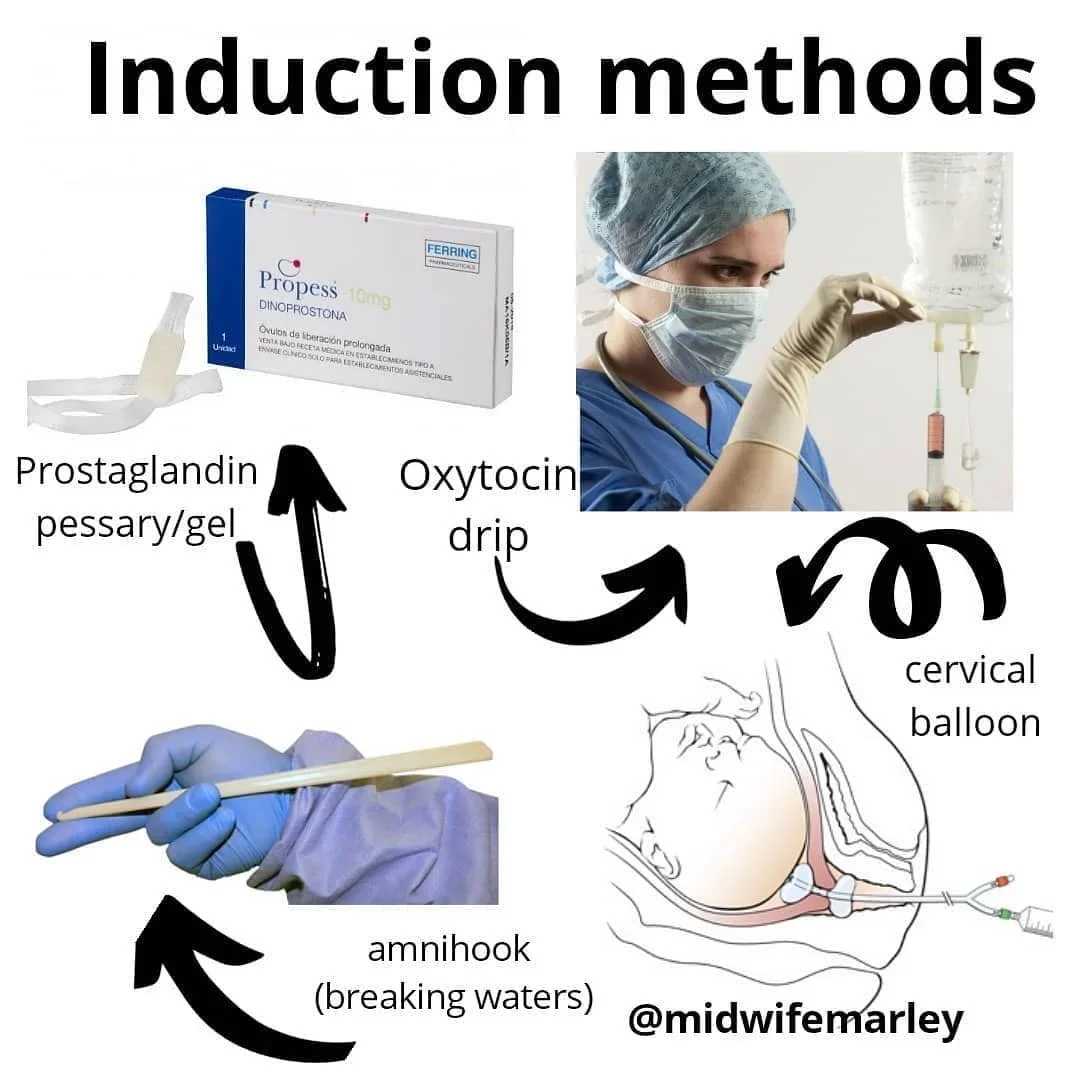
Reposting as lots of questions about induction! Did you know that there is more than one way to induce labour in hospital? Induction of labour might be offered if you are a couple of weeks overdue or if there is a medical need meaning it would be riskier for you or your baby if you remained pregnant. Remember that induction can be offered and that it is never forced, be sure to get all the information you need from your care giver to make an informed decision yourself. When assessing what method to use, your care provider will perform a vaginal examination to assess the cervix to see how 'favourable' it is. If your cervix is closed with no signs of any changes, the first step would be to insert a prostaglandin hormone in the form of a pessary or gel behind the cervix. This is often enough to soften the cervix and kick start labour. It doesnt work for everyone though and may require more doses. If the cervix start to soften and dilate but there are no strong contractions, the next step would be to break your waters with an amnihook. This is done vaginally by a doctor or midwife. Again this can be enough to get labour going but if not we move onto the 3rd step which is the oxytocin drip. Known as syntocinon in the UK and pitocin in the US, this drip brings on powerful contractions so you would need to be on a continuous monitor for the baby's heart rate. As it causes unnatural contractions, there is a risk of the baby not tolerating it well. There is also a risk of having too many contractions. You will be monitored caregully though so should this happen, the midwives and doctors can act appropriately. The drip is run as a continuous infusion until the birth. Sometimes, a non pharmalogical method is used to dilate the cervix - for example if you have previously had a c-section and prostaglandins can't be used due to a risk of your uterus rupturing. This is the balloon method. A doctor will place a catheter through your cervix with a balloon. The balloon is filled with a saline solution helping the cervix to dilate. There is an increased risk of c-section with inductions but plenty of women have also had successful vaginal births via this pratice.


