Post
***TRANSITION IN LABOUR***
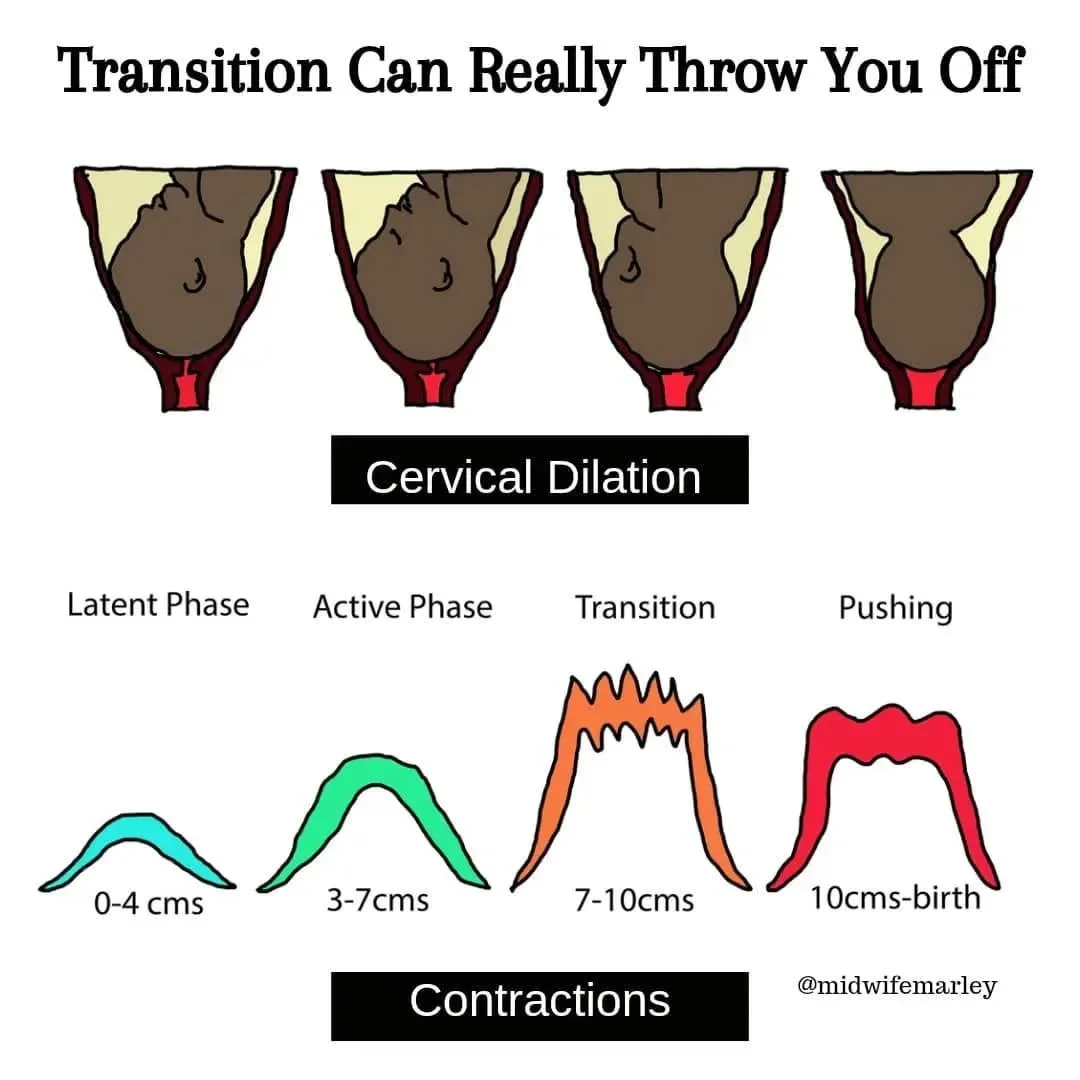
TRANSITION IN LABOUR Many people can remember the point at which they were in the transition stage. It often comes in the form of:
"I can't do it anymore, cut this baby out of me now!" Or
"I know I said I didn't want an epidural but I need it!"
Transition is the term used to mark the point at which the first stage of labour ends and the second stage begins. You can see I've illustrated the intensity of the contractions at this point in orange.
The second stage starts when you are fully dilated approx 10cm and ends with the birth of the baby.
During transition your body releases small amounts of adrenaline to keep you alert, but not so much that it hinders the birth- this is why a calm environment is so important. As the adrenaline increases, you become more aware of the intensity of the contractions as the baby starts to descend down the birth canal.
For others though, transition is actually unremarkable, especially if they have remained focused and calm throughout their labour. In straight forward labours where there are no complications and both mother and baby are in an optimal position, transition can last up to an hour before the uncontrollable urge to push takes over.
Fully dilated doesn't always mean let's get pushing straight away.
In low risk labours where there are no complications, problems with the baby's heart rate or epidurals, it's best to wait until that urge is felt before pushing. More often than not, your body takes over and knows exactly what to do. It pushes involuntarily. If you are coached into pushing before there is an urge and don't have an epidural in, it might take a lot longer to birth the baby as the head is probably still too high in the pelvis, or not putting enough pressure on the cervix and pelvic floor for the expulsion reflex to fully kick in.
#pregnancy #birth #midwifrmarley


