Post
**TRIGGERING COMMENTS**
TRIGGERING COMMENTS
The vast majority of births end with the placenta detatching from the womb and being expelled through the vagina in what is called the third stage of labour.
Very occasionally, this stage doesn't happen as it should. Usually a placenta will expel within an hour, more often within 10-15 minutes of the baby being born. If a hormone injection is given after the birth to aid the process, it can take a few minutes - This is called active management of the third stage. Allowing the placenta to expel naturally without the injection is called a having physiological third stage.
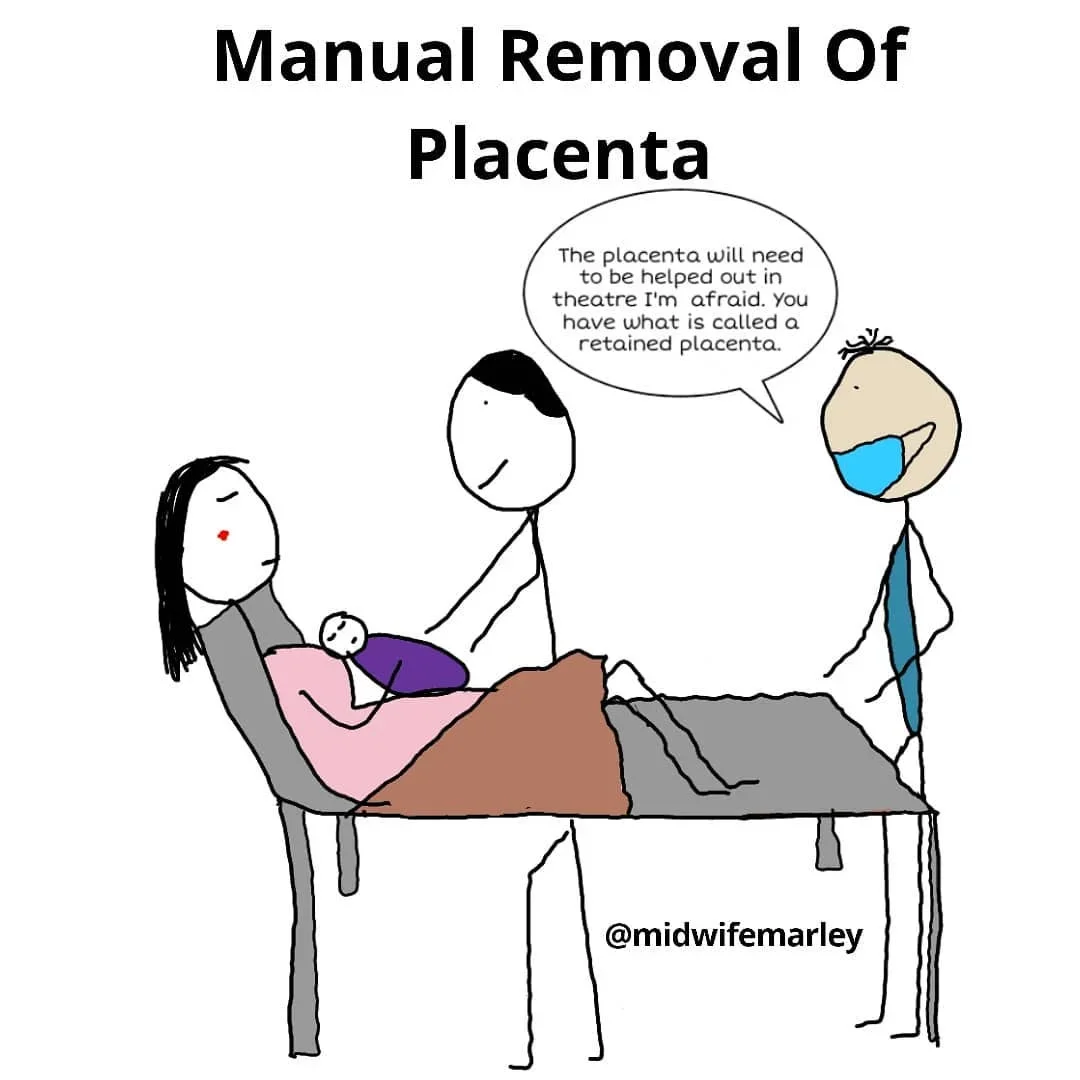
If a placenta doesnt expel within a hour, its referred to as 'retained' and may need to be manually removed in theatre under a spinal anaesthetic (if there isnt an epidural in already), as the risk of haemorrhage increases if a placenta is in the uterus for too long. It is done by the surgeon locating the placenta using their hand through the vagina and into the uterus. Nothing can be felt as there will be a total block from the spinal/epiduural.
There are several reasons a placenta may not come away including:
The cervix closing before the placenta can come out - sometimes this happens if the umbical cord snaps after the birth.
Placenta accreta - the placenta has embedded too deeply in the wall of the uterus
The uterus stops contracting so is unable to expel the placenta
If the placenta is taking a little while to come out, your midwife may encourage you to change to an upright position and feed your baby if you're breastfeeding, as this can stimulate contractions. If a manual removal is recommended, this will be discussed with you fully first.
Sometimes a small amount of placenta remains in the uterus which can also be a risk for haemorhage and infection. Any placenta should pass naturally, however if the remaining tissues don’t pass out of your vagina, you may develop symptoms at home after the birth. These may include:
Heavy bleeding, especially if it doesn't seem to be lessening.
A sore and tender abdomen
Smelly vaginal discharge.
Fever.
Contact your care provider if you are suffering any of these postpartum
#placenta #postpartum